Cue the Fairy Tale Characters, Please
Jill Reid
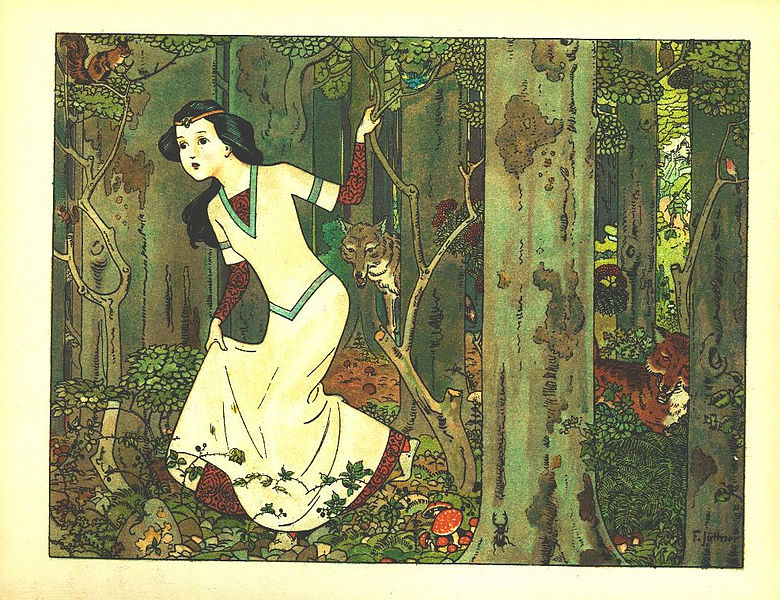 My sister once bought a Dollar Store Snow White wig for my daughter. Three-year-old Ellie used to drag it behind her the way Linus clung to his blue blanket. She donned it at breakfast and slept in it at naptime. Day after day, wigged and rapt, she caressed the cheap dark locks with sticky toddler paws as Disney’s Snow White’s soprano pierced the thin walls of our apartment.
Symbols are powerful. Even sticky old wigs have their magic, and in retrospect, the season of the Snow White wig was thick with both fairy tale and curse. Disney’s Rapunzel and Sleeping Beauty and Snow White played on loops on the living room TV, their Technicolor endings a crescendo of orchestra music, ball gowns, and satisfying conclusion. Meanwhile, I re-read passages for literature classes in which the dragon killed Beowulf, and Othello murdered Desdemona. Mr. Hyde overcame Dr. Jekyll, and poor tentative Alfred J. Prufrock measured out his “life in coffee spoons.”
Those stories, in contrast to the fairy tale, were as fragmented as the world my child and I lived within. During the season of the Snow White wig, my own life experience with single parenthood, toddler potty training, and exhaustion dug in its heels against the “simplicity” of fairy tales. Really, how do you embrace the enchantment in Snow White’s story, when what you have read and lived and survived suggests that in your own story, should you ever bite into one of life’s poison apple, you will have to drive your own poisoned self to the ER?
That was also the season when, in the middle of a week sopping with the weariness of cynicism, my notebook became a revelation. I sat at my desk writing the word “Loss” over and over without even realizing the path my pen was taking. And next to that, I jotted down a statement by C.S. Lewis that, prior to that moment, had existed only as a lovely sentiment I intended to quote to students.
“Loss. Loss. Loss,” my notebook read. "Some day you will be old enough to start reading fairy tales again,” C.S. Lewis told me. And just like that, after months of rolling my eyes at Snow White and Sleeping Beauty, I saw the wisdom in Ellie’s beautiful, tangled Snow White wig. “What,” I could almost hear Snow White whisper, “has ever been easy about overcoming a curse?”
Perhaps when C.S. Lewis talks about growing old enough to read fairytales again, he alludes to the slowly re-gained wisdom in believing in the possibility of the cursed truly overcoming their curses - even on this side of heaven. Rather than a curse that divvies itself out over a lifetime in wrinkles and mortgage payments, the fairy tale offers one pure cup of concentrated curse, potent as Snow White’s apple, for us to swallow and overcome all at once. There is a special kind of relief in knowing exactly what curse you’re up against , how to defeat it, and that it can be defeated at all.
Of fairy tales, Neil Gaiman, in a paragraph of G.K. Chesterton’s longer explanation, wrote, “Fairy tales are more than true; not because they tell us that dragons exist, but because they tell us that dragons can be beaten.” Each day, the dragons gather. They show up in the latest news cycle. They loom when I sit down to pay the bills or comfort a sick child. In class, I spend hours discussing all the gray spaces where the heroes fall to dragons or where, sometimes, there are no heroes at all. But, as I grow older, I believe more and more that in a world full of dragons, there is a special wisdom in embracing the fairy tale, matted and familiar as a Snow White wig, as a place of empowerment, where we can, at least for the breadth of a story, watch the dragons fall.
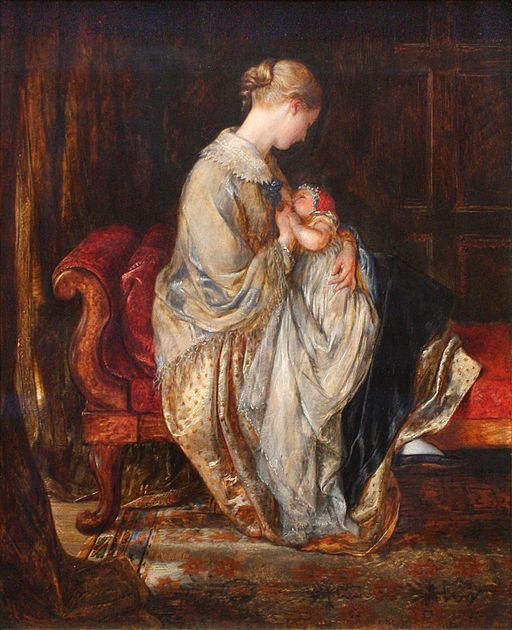
 It usually doesn’t happen until about mid-journey. Up till that point, the sun has been up, and you can see where you’re going. You’ve never been in this kind of car before, and you like some of the buttons and the scenery outside your window—old barns or even the edges of industrial wastes—and just the experience of being in the passenger seat and wondering where it is you’re going. The driver has a hypnotic voice and quirks that are fascinating; a tattoo runs down the side of his neck—“R-A-” something.
 Train us Lord to fling ourselves upon the impossible
 Sports have made me a superstitious person. Whenever
  Though I am as dismayed as anyone by the current election year antics, I take comfort in remembering that bald-faced lunacy exercised in high places is nothing new. But I still have the sense that this election cycle is in a league of its own. Hopefully the bilious clouds of insanity swirling around us this fall will one day coagulate to something Americans can still recognize, once the whole thing is relegated to the history heap.
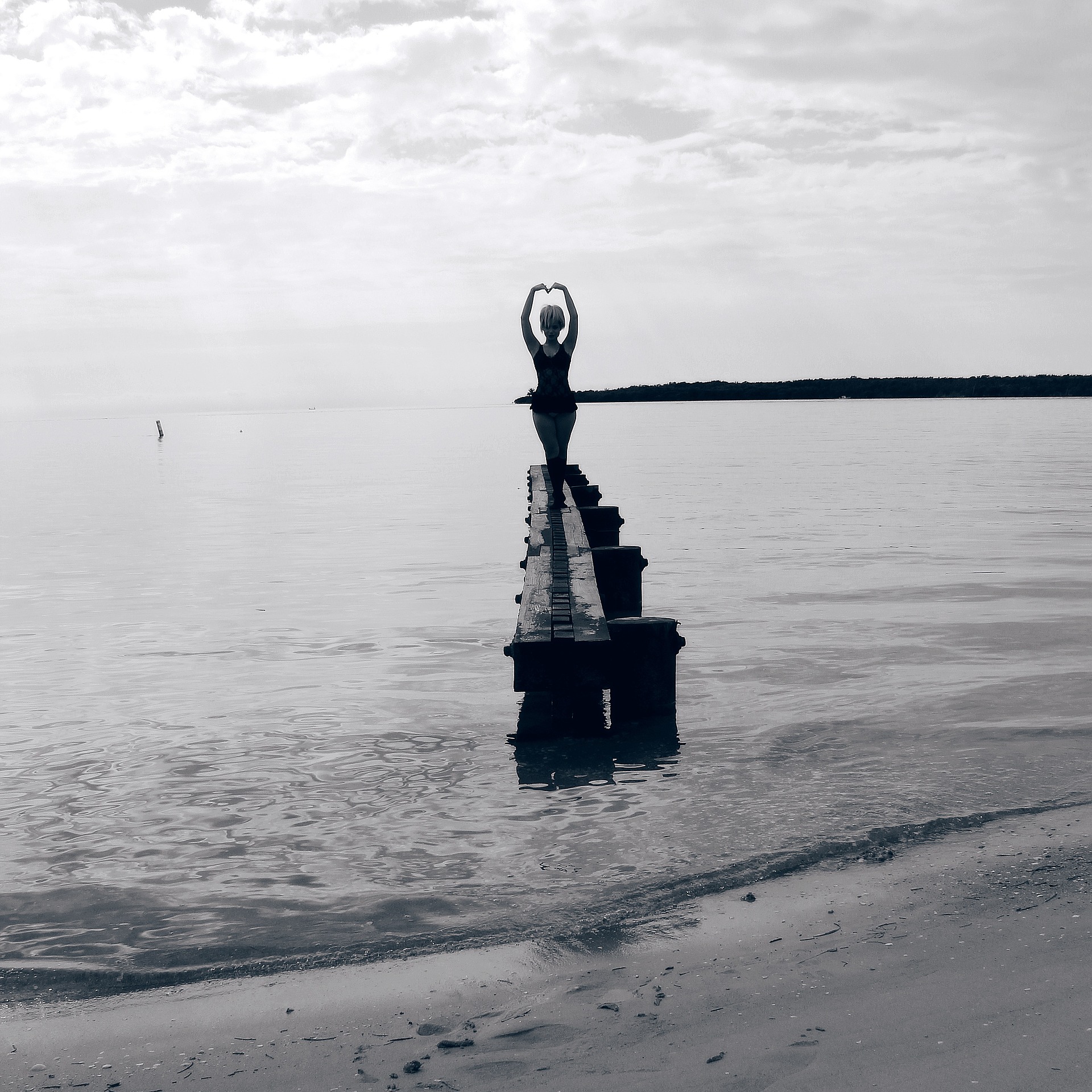 A big bank just released a campaign with the following line, “A ballerina yesterday. An engineer today. Let’s get them ready for tomorrow.” When I saw it, a chuckle snuck out before I could muster up the will to be outraged. And I should be outraged. I should be offended and threaten to pull my patronage, at least, that’s what the dancers that make up a bulk of my Facebook newsfeed tell me. This advertisement is just one more national campaign that invalidates the important contribution artists make to society and discourages young people from careers in the arts, or whatever.
![By Colin Mutchler from Brooklyn, United States (Flickr) [CC BY 2.0 (http://creativecommons.org/licenses/by/2.0)], via Wikimedia Commons](http://static1.squarespace.com/static/5898e29c725e25e7132d5a5a/58aa11bc9656ca13c4524c68/58aa12239656ca13c4525ec7/1487540771442/Mlk_quote.jpg?format=original)
![By Thesupermat (Own work) [CC BY-SA 3.0 (http://creativecommons.org/licenses/by-sa/3.0)], via Wikimedia Commons](http://static1.squarespace.com/static/5898e29c725e25e7132d5a5a/58aa11bc9656ca13c4524c68/58aa12239656ca13c4525ec5/1487540771195/Pilate-Gesture.jpg?format=original) It’s so staged, so false, so politician of him. After a days-long drama of political wrangling over authority and jurisdiction that extends into the dream world of his wife, the man of power ends the debate with a gesture. Perhaps it’s his political signature: staged events to render judgments. Perhaps, backed into a corner, it’s only this time that he does it. Perhaps it’s simply functional, a way to communicate to those in the back of the crowd who can’t hear. Whatever the case, to put an end to the problem of Jesus of Nazareth, Pontius Pilate resorts to gesture: a subordinate appears on stage bearing a bowl and a towel; the man washes his hands, dries them, leaves the stage.
It’s so staged, so false, so politician of him. After a days-long drama of political wrangling over authority and jurisdiction that extends into the dream world of his wife, the man of power ends the debate with a gesture. Perhaps it’s his political signature: staged events to render judgments. Perhaps, backed into a corner, it’s only this time that he does it. Perhaps it’s simply functional, a way to communicate to those in the back of the crowd who can’t hear. Whatever the case, to put an end to the problem of Jesus of Nazareth, Pontius Pilate resorts to gesture: a subordinate appears on stage bearing a bowl and a towel; the man washes his hands, dries them, leaves the stage.

 “Stick to the daily learning targets. Do not get off track.” This is one of my administrators, the one that meets with me once a week to go over my lesson plans. Daily Learning Targets are like Bible Memory Work: we are to write these words on our hearts and minds. Do not stray from these words. And it’s not that I stray, but if I were to claim a characteristic of my teaching it’s that when I begin to study and discuss a story, I tend to walk my students down a path that we didn’t know we were going to walk down.
  Four of the five years I spent selling myself to creative writing programs, I used this gem in my personal statement:
  Nothing Gold Can Stay
 The sun is snuggled still sleeping behind the mountains. He pulls their snowy peaks over his head and indulges in another hour of sleep. Not me, though. I’m awake. I’m out in public. I am caffeinated and somewhat functional. I am not necessarily in a bad mood. It's just a morning one. I am working the opening shift at the cafe. The sky is still dark.
 Read
Read 